
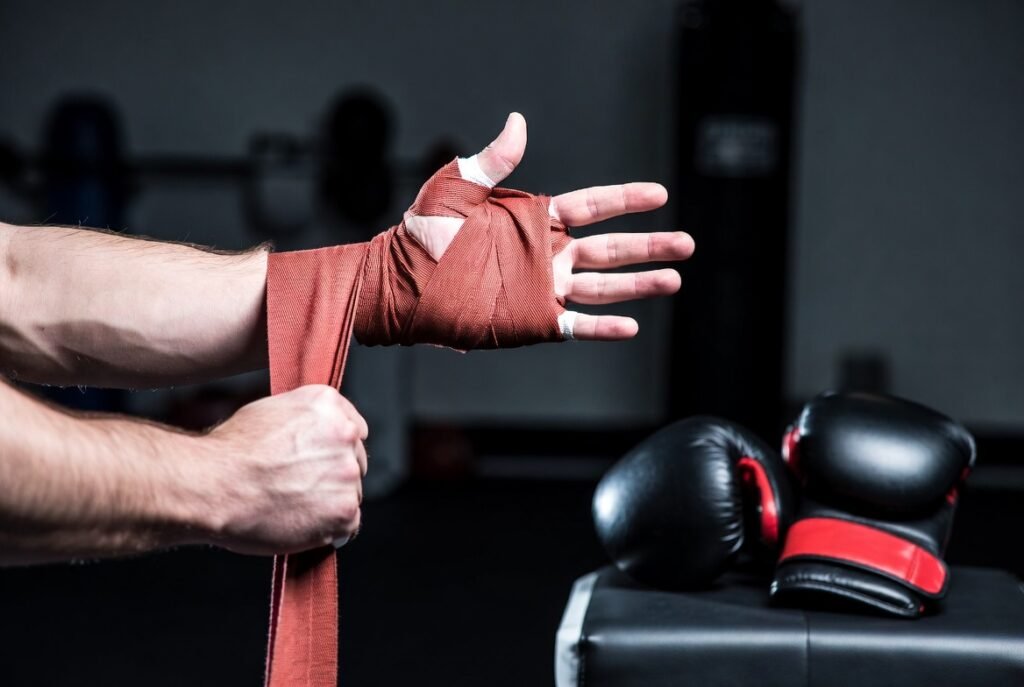
Hand wraps are one of the most important pieces of boxing equipment, yet many beginners still wear them incorrectly.
Some fighters wrap their hands far too loose, which provides almost no wrist support. Others wrap them so tight that circulation gets restricted and their hands go numb halfway through training.
So, how tight should boxing hand wraps actually be?
The answer is simple:
Boxing hand wraps should feel snug, secure, and supportive — but never painfully tight.
Properly wrapped hands protect:
- Wrists
- Knuckles
- Thumb joints
- Small hand bones
- Tendons and ligaments
Whether you train in boxing, MMA, Muay Thai, or kickboxing, learning proper hand wrap tightness is essential for injury prevention and long-term performance.
In this complete guide, you will learn:
- How tight boxing wraps should feel
- Signs your wraps are too tight
- Signs your wraps are too loose
- How to wrap hands correctly
- Common beginner mistakes
- Best hand wraps for boxing training
By the end, you will know exactly how to wrap your hands safely and comfortably for every training session.
How Tight Should Boxing Hand Wraps Be?
Many beginners think boxing gloves alone protect the hands.
They do not.
Your hands contain:
- 27 small bones
- Multiple joints
- Tiny tendons and ligaments
Punching repeatedly without proper support places huge stress on these structures.
Hand wraps help by:
- Stabilizing the wrist
- Supporting knuckles
- Keeping hand bones aligned
- Reducing impact stress
- Improving glove fit
This is why experienced fighters never skip wraps during training
How Tight Should Boxing Hand Wraps Feel?
Proper boxing hand wraps should feel:
- Tight enough for support
- Loose enough for healthy circulation
- Comfortable during movement
- Secure when making a fist
The wraps should compress the hand slightly without creating pain or numbness.
A good test is this:
You should be able to:
- Open and close your hand comfortably
- Make a full fist naturally
- Move fingers without tingling
If your hand feels numb, cold, or painful, the wraps are too tight.
Signs Your Hand Wraps Are Too Tight
Overtight wraps are extremely common among beginners.
Many people think tighter automatically means safer.
It does not.
Wraps that are too tight can:
- Restrict blood flow
- Cause numb fingers
- Reduce hand mobility
- Create discomfort inside gloves
- Increase fatigue during training
Common Symptoms of Overly Tight Wraps
Tingling Fingers
This usually means circulation is restricted.
Hand Numbness
A major sign the wraps are excessively tight.
Pain While Making a Fist
Your hand should still close naturally.
Cold Fingers
Poor circulation may cause temperature changes.
Wrist Discomfort
Too much pressure around the wrist can create stiffness.
Signs Your Hand Wraps Are Too Loose
Loose wraps are equally problematic.
Without proper compression, the hands lack support during impact.
Symptoms of Loose Hand Wraps
Wrist Feels Unstable
Your wrist should feel supported during punches.
Wraps Shift Inside Gloves
Movement means poor support.
Knuckles Feel Unprotected
Padding should stay firmly positioned.
Hand Slides Around in Gloves
Loose wraps reduce glove stability.
Why Proper Wrap Tightness Is So Important
Correct hand wrapping helps prevent common boxing injuries like:
- Wrist sprains
- Boxer’s knuckle
- Thumb injuries
- Metacarpal pain
- Hand fatigue
Improper wrapping increases stress on:
- Joints
- Bones
- Tendons
Even expensive gloves cannot fully protect badly wrapped hands.
Best Areas to Keep Tight vs Flexible
Not every section of the wrap should have the same pressure.
This is one of the biggest secrets to comfortable hand wrapping.
Wrist Area Should Be Firm
The wrist needs strong stabilization.
A firmer wrap here helps:
- Prevent bending
- Maintain punch alignment
- Improve support during impact
However, avoid cutting circulation.
Knuckle Area Should Be Cushioned
The knuckles need:
- Padding
- Comfort
- Shock absorption
Too much pressure across knuckles can become painful quickly.
Fingers Should Stay Mobile
Wraps between fingers should:
- Keep structure secure
- Allow natural finger movement
Never over-compress finger areas.
How to Wrap Hands Correctly for Boxing
Good technique matters more than extreme tightness.
Step 1: Start at the Thumb Loop
Place the thumb loop securely and begin wrapping around the wrist.
This creates your support foundation.
Step 2: Stabilize the Wrist
Wrap the wrist several times firmly.
The wrist is one of the most injury-prone areas in boxing.
Step 3: Protect the Knuckles
Spread wrap layers evenly across the knuckles for padding.
Do not bunch the fabric.
Step 4: Wrap Between Fingers
This helps:
- Keep wrap structure stable
- Prevent bunching
- Improve fit inside gloves
Step 5: Finish With Wrist Support
End with additional wrist reinforcement.
Secure the Velcro tightly but comfortably.
Best Boxing Hand Wrap Length
Most adult fighters prefer:
- 180-inch hand wraps
These provide enough material for:
- Wrist support
- Knuckle padding
- Thumb stabilization
Shorter wraps may not provide sufficient support for larger hands.
Mexican-Style Wraps vs Traditional Wraps
Different wrap materials affect tightness and comfort.
Mexican-Style Hand Wraps
These include slight elasticity.
Benefits:
- Better fit
- More comfort
- Improved wrist compression
Very popular among boxers and MMA fighters.
Traditional Cotton Wraps
Less stretch but more rigid support.
Some fighters prefer their stable feel.
Common Hand Wrapping Mistakes Beginners Make
Learning proper hand wrapping takes practice.
Avoid these mistakes.
Wrapping Too Tight
Overtight wraps reduce circulation and comfort.
Wrapping Too Loose
Loose wraps fail to stabilize the hands properly.
Ignoring the Thumb
The thumb is vulnerable during hooks and awkward punches.
Uneven Knuckle Padding
Uneven wrap layers create pressure points inside gloves.
Rushing the Process
Good wrapping takes time and precision.
Should Hand Wraps Hurt?
No.
Hand wraps should feel:
- Supportive
- Secure
- Comfortable
They should never cause:
- Sharp pain
- Tingling
- Numbness
- Severe pressure
If they hurt, rewrap your hands properly.
How Often Should You Replace Boxing Hand Wraps?
Hand wraps absorb:
- Sweat
- Bacteria
- Moisture
Over time they lose elasticity and support.
Replace wraps when they:
- Stretch out excessively
- Smell permanently bad
- Tear or fray
- Lose Velcro grip
Most active fighters own multiple pairs.
Washing Hand Wraps Properly
Clean wraps improve:
- Hygiene
- Comfort
- Glove freshness
Best Way to Wash Hand Wraps
- Use cold water
- Air dry when possible
- Use mesh wash bags to prevent tangling
Avoid excessive heat drying because it weakens elasticity.
Do MMA Fighters Use Hand Wraps Too?
Absolutely.
MMA fighters wrap hands for:
- Sparring
- Pad work
- Heavy bag sessions
Even inside MMA gloves, wraps help stabilize:
- Wrists
- Knuckles
- Thumb joints
Final Thoughts on Boxing Hand Wrap Tightness
Learning how tight boxing hand wraps should be is essential for both comfort and injury prevention.
The perfect wrap should feel:
- Snug
- Stable
- Comfortable
- Supportive
Not painfully tight.
Proper hand wrapping helps fighters:
- Protect wrists
- Prevent knuckle injuries
- Improve punching stability
- Train more confidently
The goal is balance — enough compression for protection without restricting circulation.
Once you learn proper wrapping technique, you will immediately notice:
- Better glove fit
- Improved wrist support
- More comfortable punching
- Reduced hand fatigue
Good hand wraps are not optional in boxing.
They are part of training intelligently.
Recommended Hand Wraps & Boxing Gear
At RightPunch Sports, fighters can find:
- Boxing hand wraps
- Boxing gloves
- MMA sparring gloves
- Headgear
- Shin guards
- Boxing shoes
- Protective training gear
Using quality hand wraps and properly fitted gloves helps improve comfort, safety, and overall performance during training.